By Seamline workshop, marine upholstery team. Updated September 27, 2026
Reticulated quick-dry foam is open-cell, so water runs straight through it and it dries fast. Closed-cell foam does not absorb water at all but is very firm. Standard high-density polyurethane soaks up water like a sponge, so on deck it needs a moisture wrap and a sealed cover.
What it is
Three foams, three behaviors
01Reticulated quick-dry foam is open-cell, so water runs straight through
02Closed-cell foam does not absorb water at all, and it is very firm
03Standard polyurethane soaks up water like a sponge
In the rain
Where the water goes
Reticulated quick-dry
Drains through, dries fast
Closed-cell
Does not absorb water, very firm
On the boat
Which foam goes where
1Helm seat and leaning post Quick-dry foam for rain and spray
2Sunpads Quick-dry foam that gets soaked
3Cockpit cushions you step on Closed-cell, firm
4Berth pad in the console Premium polyurethane kept dry
Side by side
Open cell or closed cell
1
Reticulated quick-dry
Drains through, dries fast, soft to medium
2
Closed-cell
Does not absorb water, very firm, doubles as flotation
3
Antimicrobial polyurethane
Soaks it up, needs a moisture wrap under sealed vinyl
Colors
Covers that go over the foam
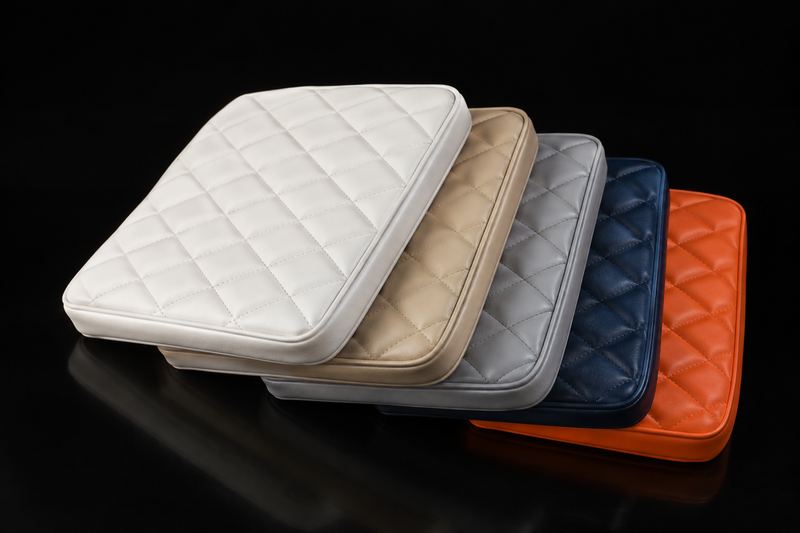
Seat vinyl colors from the makers, for the cover over your new foam.
Screen colors differ and shades shift between production runs, so ask us for samples before you choose.
Up close
Foam up close
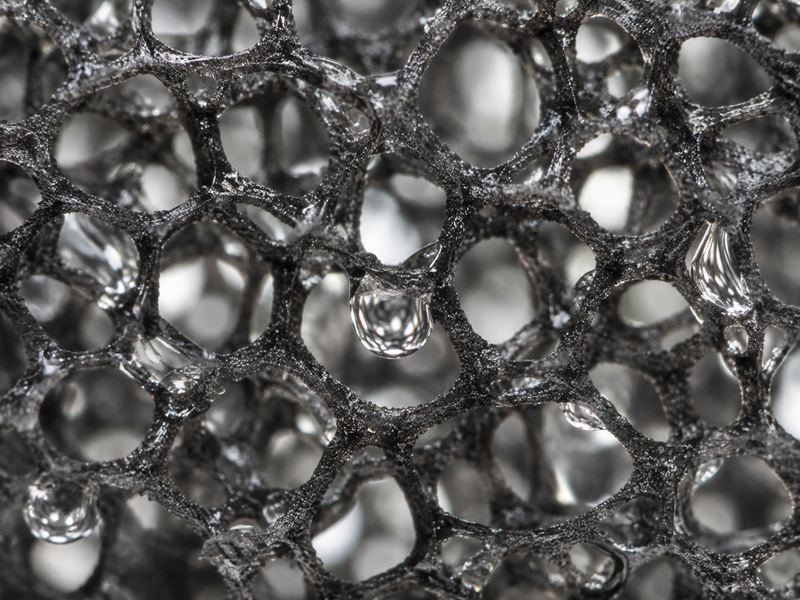
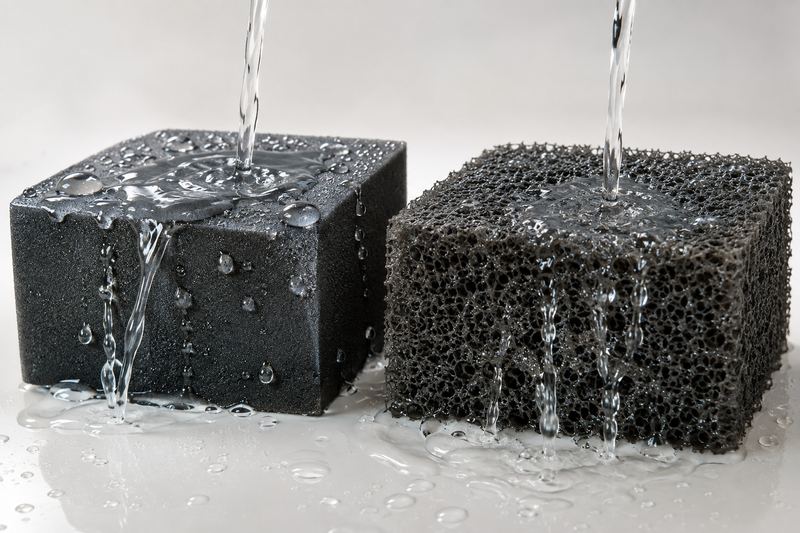
Open cells, water passes through
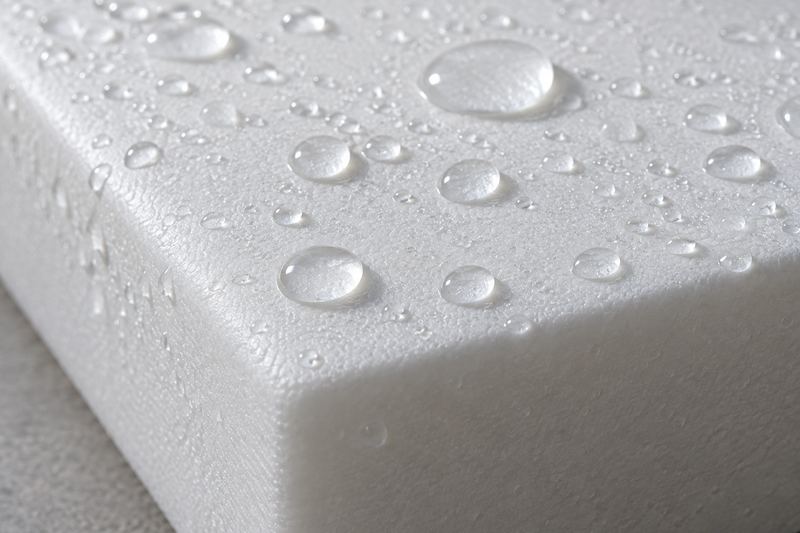
Closed skin, water sits on top
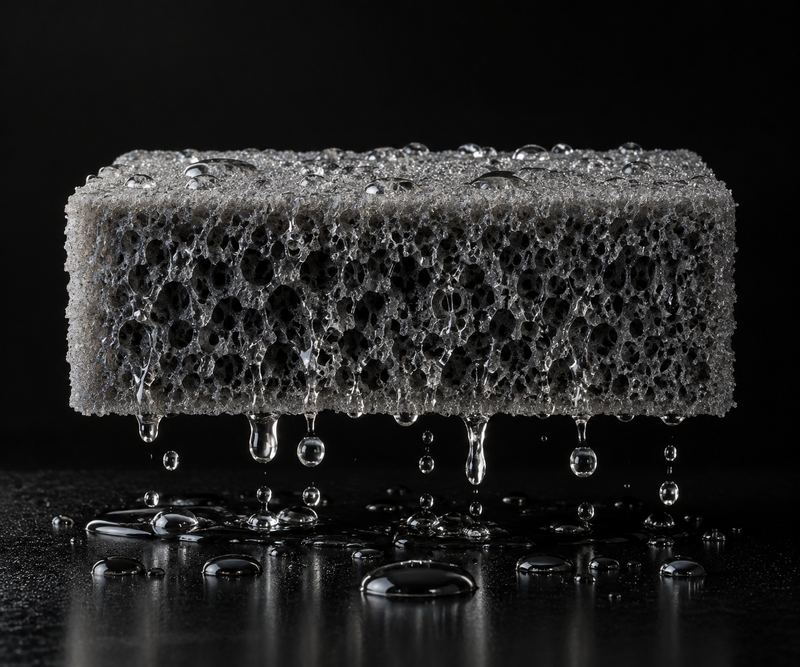
A quick-dry block draining
Finished cushions over the foam
Closed-cell or quick-dry foam
These two are often mixed up, and they are opposites. Dry Fast is reticulated open-cell foam with large pores, so water passes through without being absorbed. Closed-cell foam is sealed, so water never gets in, and it doubles as flotation.
Closed-cell foam is the firmest to sit on, which suits cockpit cushions you step on. Quick-dry foam is softer and suits seats and sunpads that get soaked, paired with a cover that lets water out.
What high density means
Density is weight per cubic foot, and it is the main factor in how long foam lasts. Foam suppliers treat 1.8 pounds per cubic foot or more as the standard for seat cushions. Firmness is a separate number, so pick density first and firmness second.
How long cushion foam lasts
Foam suppliers rate Dry Fast at 1 to 3 years in occasional use, antimicrobial polyurethane at 3 to 5 years, and premium indoor foams kept dry at 10 to 20 years. On a boat, life varies with exposure, since sun reaching the foam through mesh breaks it down and wet foam feeds mildew.
Foam types compared
Foam
In water
Feel
Fits
Reticulated quick-dry
Drains through, dries fast
Soft to medium
Seats and sunpads that get soaked
Closed-cell
Does not absorb water
Very firm
Cockpit cushions, flotation
Antimicrobial polyurethane
Soaks it up
Medium
Covered seats with a moisture wrap
Premium or HR polyurethane
Soaks it up, not antimicrobial
Supportive
Cabin seating and berths
What we use and why
Quick-dry foam in seats that sit in rain and spray
Antimicrobial foam wrapped in film under sealed vinyl
Closed-cell foam where a firm step matters
Questions
Questions boat owners ask
What kind of foam do you use for boat cushions?
It depends on where the cushion lives. Quick-dry foam for seats that get soaked, antimicrobial polyurethane in a moisture wrap under sealed vinyl, and closed-cell foam for firm cockpit cushions.
Is closed-cell foam the same as quick-dry foam?
No. Quick-dry foam is open-cell and lets water run through. Closed-cell foam keeps water out entirely. SeaDek decking, for example, is closed-cell foam that SeaDek says will not absorb water.
Does quick-dry foam need a special cover?
It needs a way for water to leave, such as a mesh or breathable bottom panel. Mesh also lets sun reach the foam, which shortens its life.
Can wet foam stain my vinyl?
Yes. Morbern and OMNOVA both trace pink stains to microbes growing in wet foam and wood under the cover. Foam that dries fast is part of the fix.
Next step
Get a quote
Press your cushion and send a photo. We tell you if the foam can stay.